Category I: The Human Pressure Cooker · Pilot 07 of 15
On the final night before a diner closes forever, the last customer orders the same meal every ten minutes and insists he has never been there before.
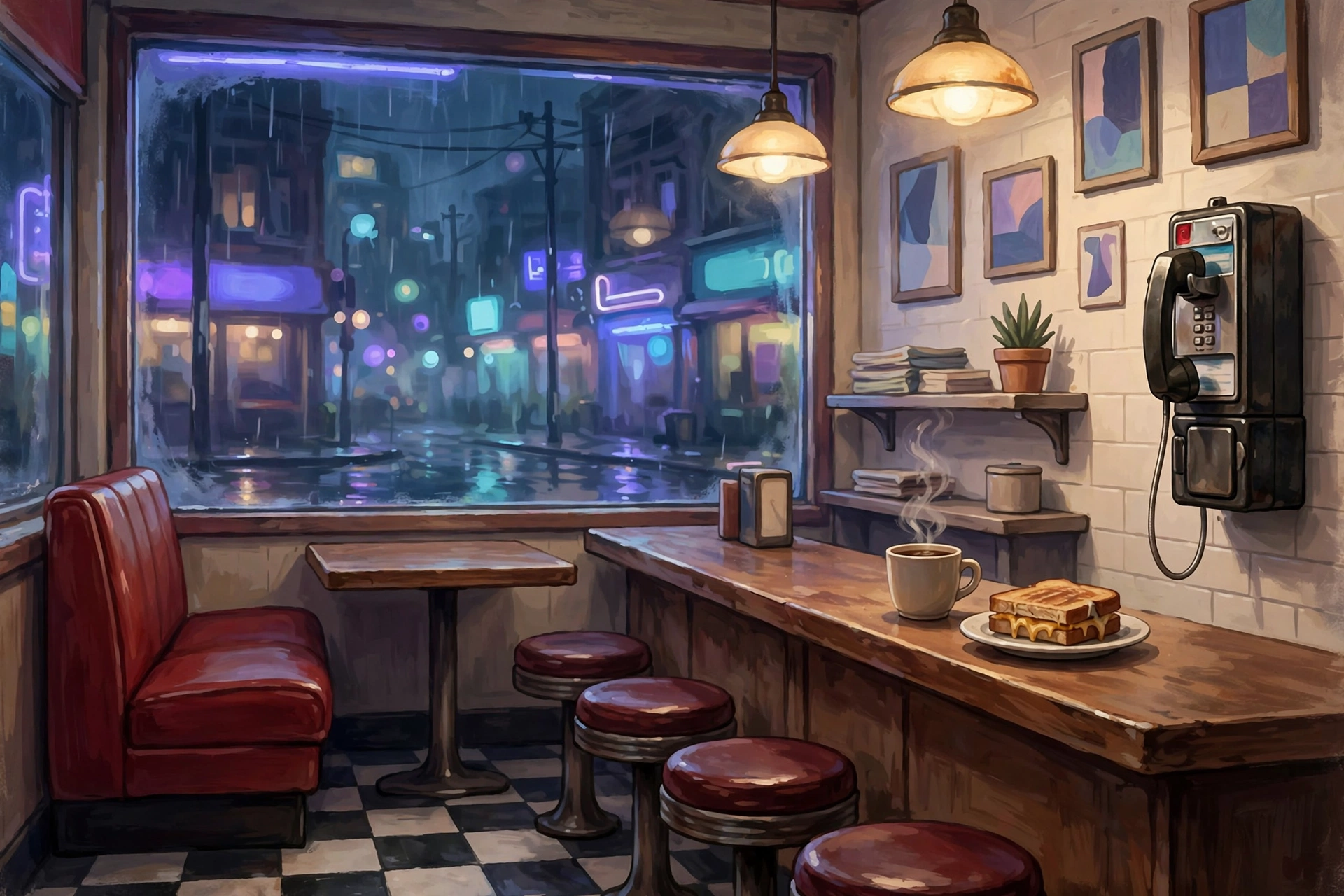
Rosa has worked the night shift at a neighborhood diner for thirty-one years. A man arrives shortly before closing and repeatedly orders coffee and grilled cheese, each time claiming it is his first visit. He asks to use a disconnected payphone because he used to call his daughter after every night shift. Rosa remembers him and remembers the calls stopped long before the phone was disconnected. The film keeps the man’s state deliberately uncertain, but makes his regret emotionally clear.
Rosa cleans the diner as a moving crew removes furniture. She leaves one repaired booth untouched, treating an ordinary object like an old friend.
The man orders coffee and grilled cheese, finishes, and orders again. Rosa recognizes his habit of folding the napkin into a tiny square.
He asks to use the disconnected payphone and says he promised to call his daughter. He knows her number by heart but has not dialed it in years.
Rosa recalls that his daughter once waited for him at the diner for two hours. He never arrived, and she eventually stopped coming. The ritual had not repaired the relationship.
The man remembers an argument that ended the calls. He was always working, always promising to come home, and always finding another reason to stay late. Rosa says people can know they are loved and still be hurt by how that love is delivered.
He asks Rosa to write down his daughter’s number. He does not call during the film. At sunrise, Rosa turns the key in the front door. The booth is empty; the disconnected phone remains until the crew removes it.
The man finally faces what he regrets, but the film does not confirm whether he was physically present, confused by memory, or something else.
Repeated action that changes meaning; subtle uncanny cues; natural dialogue; no exposition that resolves ambiguity unnecessarily.