Foundation Pilots · Pilot 01 of 15
A court transcriptionist hears a recording of a murder that has not happened yet. The voice describing it is her own.
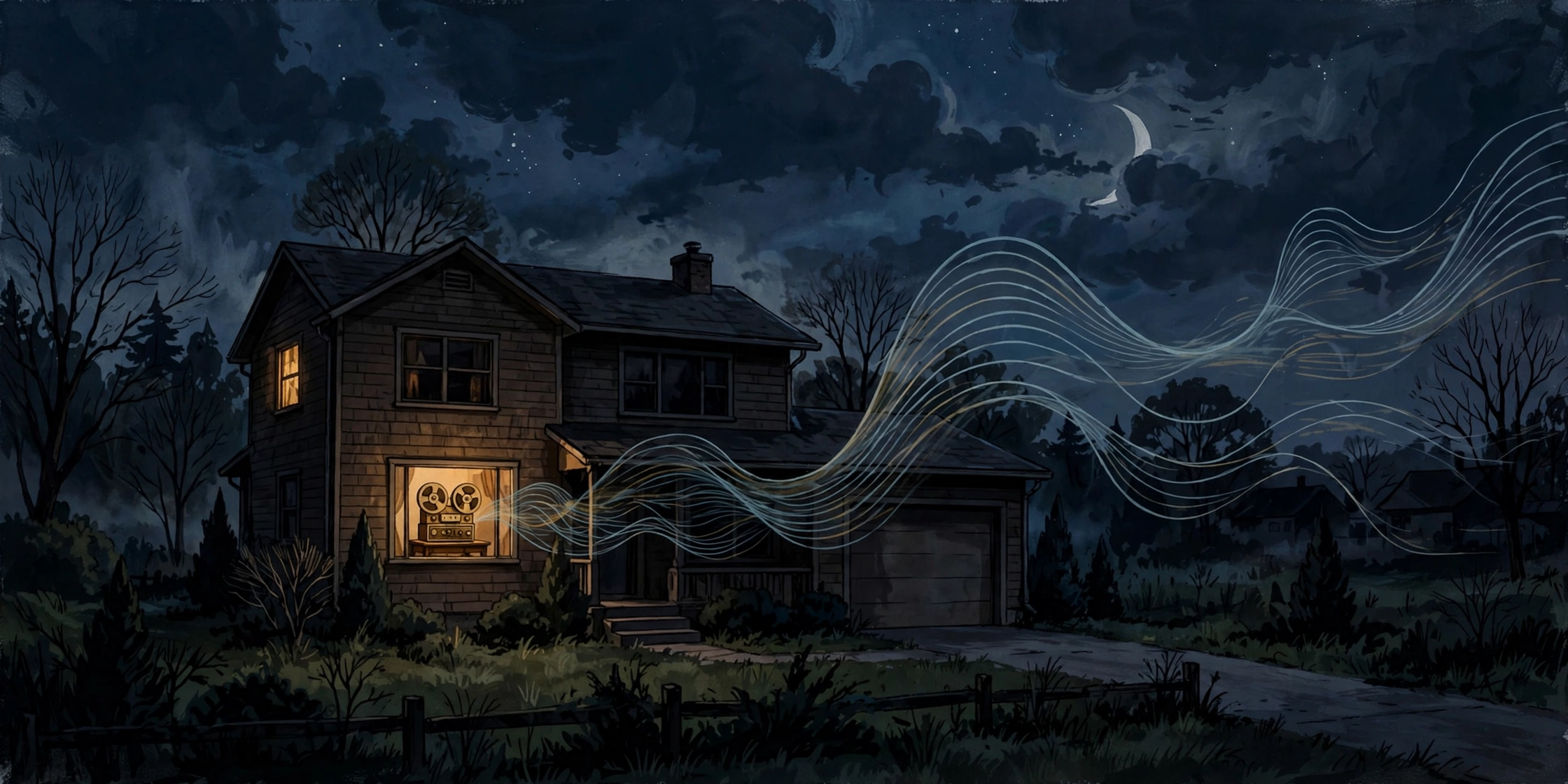
Nora, a meticulous court transcriptionist, is hired to catalogue recordings found in a house whose owner, Elias, has vanished. The recordings appear to predict small actions in Nora’s day. At first the predictions are mundane: a dropped cup, a phone call, a door left open. Then one recording describes a violent event inside the house, including details Nora has not told anyone. The story never gives the phenomenon a tidy mythology. Instead, Nora’s attempt to verify the recordings exposes a buried failure in her own past and makes the house feel less like a haunted location than a machine that rearranges certainty.
Nora inventories reels and digital files in Elias’s mostly ordinary house. A recording names the sound she is about to make before she makes it. She blames coincidence and checks the file metadata.
A second recording predicts a phone call and the exact phrase spoken by the caller. Nora tests the sequence, deliberately changing her routine. The prediction still lands, but through a different path.
Nora searches the house for Elias and finds no signs of a struggle, only an unfinished inventory and a room with unusually careful acoustic treatment. His absence becomes more troubling than any visible supernatural effect.
A recording contains Nora’s voice describing a detail from her childhood that she has never included in the case notes. She stops listening, then returns to it because not knowing feels worse.
Nora creates a literal transcript and compares it with the audio. A sentence appears in the transcript that she cannot hear on playback. When she rechecks it, the sentence is gone. The film establishes that the evidence itself cannot be trusted to remain stable.
A remembered incident resurfaces: years earlier, Nora altered the wording of a statement to make a frightened witness sound more certain. The change seemed minor, but it affected a real person’s life. The house’s recordings echo the difference between what happened and what the record says happened.
Nora follows a sound through the house and finds a doorway where a wall should be. Inside is an empty room with a running recorder. No figure appears, and no explanation arrives. The room contains a new recording dated tomorrow.
Nora plays the final file. It describes her leaving the house, then a quiet sound from a room she has not entered. She leaves anyway. Outside, she hears the same sound from the supposedly empty house. The ending stays unresolved: the recording may be warning her, documenting her, or making the distinction meaningless.
Nora chooses to leave without claiming she understands what happened. The final sound follows her beyond the house, turning an apparently contained mystery into an unresolved disturbance.
Voice identity and dialogue fidelity; audio-led suspense; stable house geography; repeated sounds that gain meaning rather than repeat information; deliberate ambiguity without random plot drift.