Category I: The Human Pressure Cooker · Pilot 04 of 15
A family gathers to divide their dead mother’s belongings. One sibling refuses to remove an empty chair because, she says, their mother is still coming home.
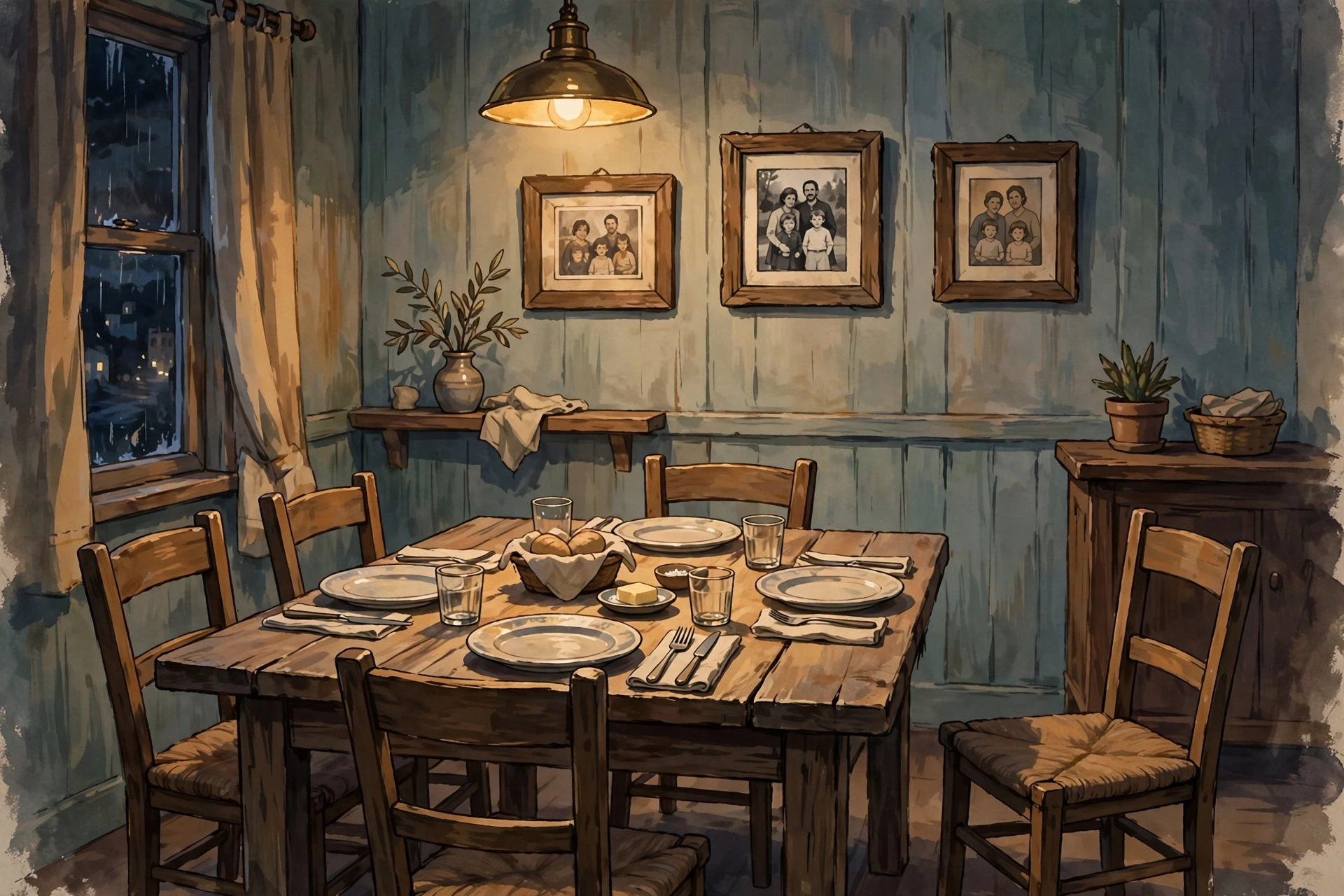
Three adult siblings meet in their childhood home one week after their mother’s funeral. They need to sort belongings and settle the estate, but Mara insists the dining table remain set as it was on the last night the family ate together, including a place for their dead eldest brother Daniel. Letters their mother kept hidden reveal that the siblings have preserved different versions of the night Daniel died. There is no secret murderer or supernatural answer. The emotional mystery is why each survivor needed a different story to keep living.
Mara lays out four plates though only three siblings are present. Peter removes the extra plate; Mara replaces it. June tries to redirect the argument toward the estate paperwork. Nobody says Daniel’s name until Mara asks what he always ordered.
As they sort photographs, each sibling recalls the last night Daniel was alive. The accounts contradict one another, but none seems deliberately dishonest. The audience realizes they have never agreed on what happened.
Their father arrives with letters their mother wrote but never sent. One shows that she learned Peter left Daniel alone during a dangerous argument. Peter’s decades-long belief that she never knew begins to collapse.
June admits she told their mother Daniel was asleep when she knew he had left the house. Peter admits he blamed their father because it was easier than facing his own cruelty. Mara explains that the empty chair preserves their mother’s years of continuing to set Daniel’s place.
The letters establish the factual sequence: Daniel left after an argument, the family did not understand the danger, and grief later altered their mother’s memory. Their father admits he encouraged the comforting version to protect the surviving children from blame.
The siblings begin clearing the table. Mara wraps Daniel’s plate and places it with his photographs. Peter asks if she is angry. She says yes, but does not want anger to be the only thing they keep. They eat breakfast together without the extra setting.
The siblings cannot undo what happened, but they stop treating one comforting story as the price of remaining a family.
Subtext-heavy dialogue; emotional shifts expressed through props and blocking; distinct sibling voices; no melodramatic exposition dump.