Foundation Pilots · Pilot 03 of 15
Big Bills
A young woman robs a Los Angeles bank, runs to a huge healthy horse waiting in a trailer, and apologizes to him for making him part of it.
Synopsis
Billie is desperate to pay for major, treatable surgery for Big Bill, her enormous adult horse. He is not old, decrepit, or a tiny pony. He is powerful, healthy, and has years left if he gets the operation. Billie begins robbing banks around Los Angeles, using the money to fund the surgery and keep the horse alive. She calls him “my little pony” with genuine affection, a private joke that contrasts with his imposing size. Before the police catch her, she wants to take him to the ocean. He has never seen it. The emotional climax is not a shootout, miracle cure, or triumphant escape. It is one beautiful moment she wants him to experience before the world closes in.
The Story, Scene by Scene
The Horse
Open with Big Bill in clear daylight: enormous, strong, alert, and visibly well cared for. Billie talks to him like family and calls him “my little pony.” A veterinary estimate establishes the cost and urgency of the surgery without implying that he is old or beyond help.
The Number
Billie tries to secure legitimate money. The amount is beyond her reach, the deadline is real, and the available options close one by one. She does not begin as a criminal mastermind; she begins as a person refusing to accept a loss.
First Job
Billie carries out a small, tense bank robbery. The sequence is grounded and brief, focused on fear, mistakes, and the consequences for ordinary people. She gets away, but the money barely changes the total.
The Cost of Staying
At the stable, Billie cleans Big Bill, checks his feed, and hides the cash. Her tenderness is practical rather than sentimental. She explains the ocean to him as if describing a place to a child.
The Pattern
A second robbery brings more money but also a recognizable pattern. A detective begins connecting the incidents. Billie’s improvisation keeps her moving, but each success narrows her options.
The Surgery Window
The vet confirms that the operation remains possible if the funds arrive in time. Billie nearly turns herself in, then learns how close the deadline is. She decides to take Big Bill to the coast first.
The Road West
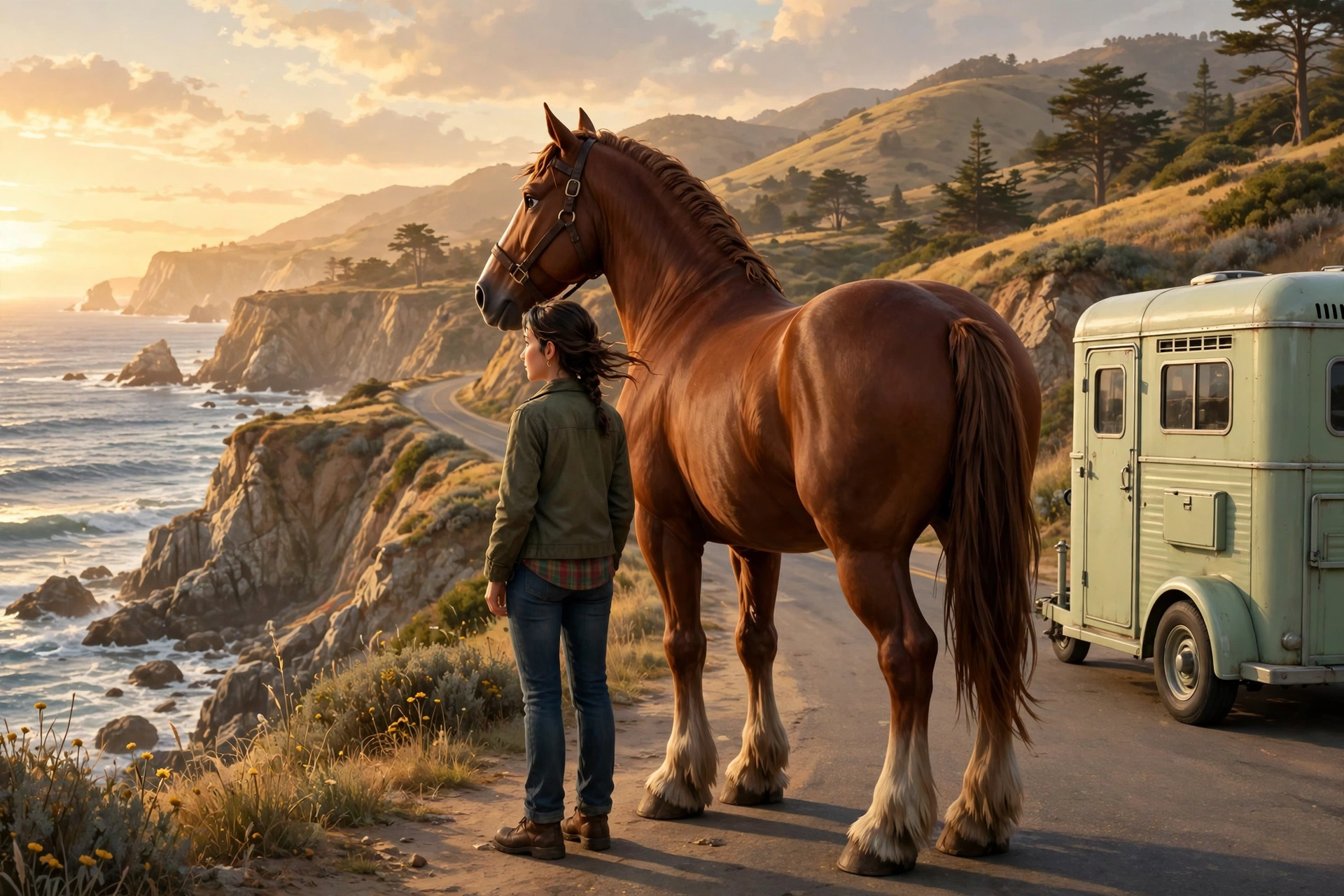
Billie drives toward the ocean with Big Bill in a safe, believable trailer setup. Police activity is approaching, but the film does not turn into an action spectacle. The journey is full of small delays and choices.
The Water
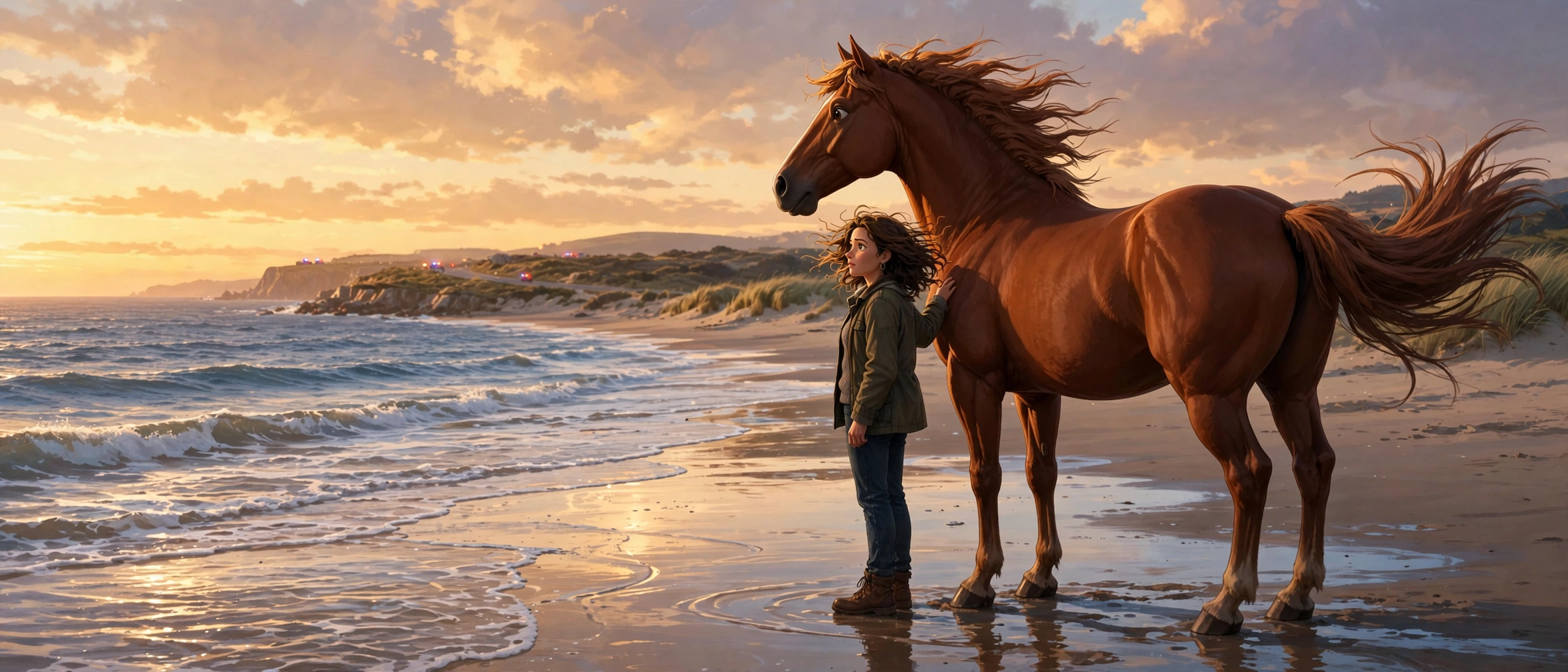
Billie unloads Big Bill on a quiet stretch of beach. He sees the ocean for the first time. The moment is spacious, tactile, and unhurried: wind, wet sand, the horse’s cautious steps, Billie’s face. She lets him experience it without narrating the meaning.
The Last Look
Police lights appear in the distance. Billie does not flee in a miraculous escape and there is no shootout. She stays beside Big Bill as he looks at the water. The final image belongs to the horse and the ocean, not the arrest.
Ending / Emotional Payoff
Billie gives Big Bill the one experience she has been saving for him. The future remains uncertain, but the emotional promise is fulfilled: he has seen the ocean.
The Ocean
What This Film Tests
Horse scale and anatomy; animal safety and repeatable behavior; believable trailer geography; grounded robbery causality; visual continuity across daylight/coast scenes; emotional payoff carried by behavior, not explanatory dialogue.
Jr DOGHOUSE
REAL STORIES. BIGGER WORLDS.